
Earlier this year, probably while wandering alone through some wilderness in New Hampshire or Vermont, I stumbled upon the idea of living in a camper. Now, this isn’t a novel concept that I came up with. No, of course not. Thousands before me have been living this lifestyle for YEARS, I just didn’t know anything about it. I began pondering: what type of camper would I buy? How big would bit be? What would it need?
I don’t have a camper yet, and in fact have not entirely settled on exactly what it is that I want, but I’d like to document this whole process for those who will inevitably come after me and be faced with the same thoughts, considerations, and hesitations.
What Type of Camper Do I Want?
First, what are my options?
-
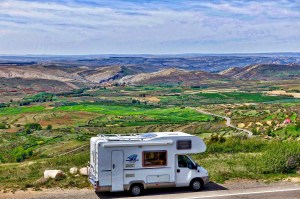
These Class C motorhomes are super cute, but I really want a separate vehicle. I like the ability to drop my camper and drive around in my car. Motorhomes: these are drivable RV’s, from the large Class A motorhomes that resemble a Greyhound Bus, to Class B camper-vans, to Class C RV’s (the ones with the over-cab bunks)
- Travel Trailers: These come in a variety of different models but the basic premise is that it’s a trailer pulled behind another vehicle. There are bumper-pull and 5th-wheel options. There are toy-haulers that can be used to haul motorcycles, 4-wheelers, etc. There are pop-ups and hybrids that include canvas pop-up or pop-out parts.
- Truck Campers: these are those slide-in campers that you slide into the bed of a pick-up truck. They can be super simple or extremely fancy.
- Vans: many nomads these days are converting vans into cozy living spaces.

While I LOVE the idea of van-living and was initially considering this option, the conversion part is what scares me. I don’t have the knowledge, experience, or funds at present to purchase and convert a van into a home that my dog and I can safely live in.
While motorhomes are nice and I love the idea of being able to park, lock-up, and walk back to the camper without ever leaving the indoors, they are super expensive and also tend to have a lot more maintenance/mechanical issues.
While truck campers are convenient and I could probably find one to fit my truck, they don’t offer quite the amount of space I desire for a full-time living space and I’m not convinced they would be appropriate for leaving my dog in during the day while I work.
I settled on the travel trailer. It has to be a bumper-pull, since I don’t have a 5th-wheel hitch. I also decided against anything pop-up or the hybrids with the pop-out extensions. I don’t want anything canvas on the trailer that will mold/mildew. Canvas also causes heat/AC loss by decreasing insulation. Another issue with canvas is that it is easier to break in to. I tend toward the optimistic and don’t think anyone would actually ever try to break in on me at night, but with canvas, all they have to do is slice through it with a knife and they are inside with you.
Now that I’ve decided on a type of RV, the real hunt begins.
What are my “must haves”?
1. Tow weight
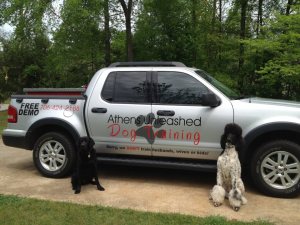
I own a 2010 model Ford Explorer SportTrac. While there are definite faults to be found with this vehicle, I rather like it and would rather not purchase another vehicle. It’s paid for and in decent shape. With this as my towing vehicle, I needed to find out what my vehicle’s towing capacity or Gross Vehicle Weight Rating (maximum weight my vehicle can safely tow) and then figure out which kinds of RV’s fit the bill.
How do you find out your GVWR? Some vehicles have it listed in the owners manual, and most have it listed on a little sticker on the inside of the driver door frame. There are also calculators online (such as THIS ONE from Camping World) that can help you determine the weight rating, however I’d use these with caution. Whatever your maximum is, most sources say to stay well below it.
My vehicles GVWR is around 6000lb. I need a trailer under that, but since most trailers “weight” is an empty or unloaded weight, I’d like to stay well below this number. Plus, the lighter the trailer, the better gas mileage you’ll get. I decided to look for an RV that was under 3000 lb. This leaves me some wiggle room.
2. Length
While a longer trailer obviously has more space, the major perk, it also comes with some disadvantages. Having a trailer a lot longer than your tow vehicle causes problems with stability of your trailer. There are a lot of fancy numbers and calculations that you can take into consideration (length of your wheelbase vs length of your trailer). However, my train of thought was: the shorter the trailer, the easier time handling/parking/hauling it I’m going to have, so what is the shortest length trailer I think I can be comfortable in?
With that question in mind, I began researching trailer lengths a little and decided that I’d like to stay under 16 feet. The trailers I’m looking at are 13-14ft, but if I found a 16-footer with all the right components at the right price, I’d probably go for that.
As a side note, I have to get a bumper hitch trailer, not a 5th-wheel, because I don’t have a 5th-wheel hitch on my truck. That is another thing to consider, and make sure to take into consideration the length of the ENTIRE trailer from hitch to back bumper when factoring trailer length.
3. Make/Model
I’m not one of those people who is obsessed with name-brands. However, I am obsessed with quality and if the brand-name lives up to its reputation in quality, then I’m all for it. I’ve been looking at two completely different types of campers and am still not entirely sure which one I want. They are:
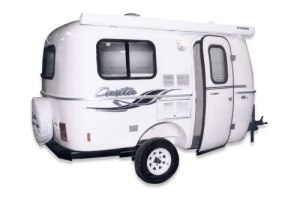
Fiberglass Campers: These campers are made from molded fiberglass, generally two parts (a top and a bottom) that come together in one seam around the middle. These types of trailers offer great insulation, are less prone to leaks, and hold their market value extremely well. I’ve mostly been looking at Scamp and Casita brand trailers, but keeping my eye out for a few other brands as well. These brands are made-to-order and have a pretty long waiting list (4-6 months – yikes!) for custom ordered RV’s. I don’t have the money for a new one, so I’m in the market for a used one. The downside to these is that they are very hard to find used, and are still fairly expensive when you do find them.
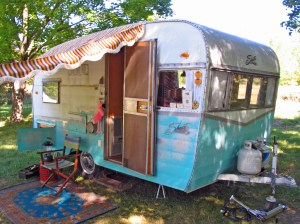
Canned-Ham Style Vintage Campers: The other variety of camper I’ve been eyeballing are the ever-popular Canned Ham type trailers that were big in the 60s and 70s. These are fairly easy to find used, but come with a whole host of “baggage” due to their age. Many leak or need complete inside restoration. They are super cool, and the vintage/retro aspect is appealing, but I’d have to find one at an awesome price and in incredible shape to merit buying it.
I’m really leaning toward the fiberglass campers. Just because of how well they are made and how well they hold their value, I think they will work great for what I’m trying to do. I’ve also read several blogs by other full-timers who have used them with great success. Check out Interstellar Orchard and RV Sue to learn more about how they are living it up in their Casita campers.
4. Bathroom
I’ve thought about it and thought about it and I really think an indoor toilet/shower is an absolute necessity for me. I realize the hassle of dealing with tanks, but I want to be able to have a safe, private space to clean up when I desire to do so.
I think I’ll mostly be parking at campgrounds. In many cases these may have a public bathhouse, which I will gladly use in lieu of my camper toilet. But in cases where I’m boondocking or stealthing (like in a parking lot), I’d like to be able to use the restroom without leaving my trailer. I’d also really like an outdoor shower option, but that’s something I can install post-purchase if necessary.
5. Price
I just returned home from a three-month backpacking trip. AKA I’m dead broke. I’ve been working hard to save money, but keep hitting setbacks. A couple weeks ago my transmission went out in my truck and that set me back a couple grand. So I’m back to square one with saving money.
I don’t like that price has to be an issue, but it does. I’m hoping to have enough saved in a few months for a sizable down-payment and to then be able to qualify for RV financing for the remaining balance.
Based on my credit and how much I think I can qualify for on a loan, and also taking into consideration how much I really want to spend, I’ve come up with $5000-$6000 being my ideal range, and willing to go up to $8000 for the absolutely most perfect camper out there.
There you have it, my big five.
These 5 things are what are MOST important to me for my purchase. There are obviously other things that I’m looking at, but these are the 5 that I’m putting the most weight on. A major factor for me is my ability to travel safely with my dog. I will have to work while traveling, and he will likely have to stay in the camper for extended periods of time (up to 8 hours) during the day while I’m away at a job. For this reason, the camper must be well-insulated and climate controlled.
How do you find the perfect camper?
Now that I know what I’m looking for, we begin the hard part. Finding a used camper is tricky business. I’m specifically looking at fiberglass RV’s, and it’s next to impossible to find those through dealers. This means I’m probably going to make a purchase from a private seller. I’ll need cash in hand, which means I’ll have to get a loan.
Where do you even look? I’ve been keeping an eye on a few different sites. For starters, since I’m in the southeast (NC), I’ve joined a couple of sale groups on facebook that specifically market RV’s and other vehicles. I’ve been browsing Craigslist every day or so for Asheville, the closest city, but also checking the “include nearby areas” option to search outside of that city and expand to other towns like Atlanta or Charlotte that are also nearby. I’ve also been obsessively checking http://www.fiberglass-rv-4sale.com/ for new posts. I’m hoping between all of these outlets, I’ll eventually spot the perfect camper. (Actually I did, a 2015 13 foot Scamp deluxe model… but its $12,000 and in New Mexico so thats probably not gonna work).
What am I forgetting?
If you’re an experienced RV’er and have anything to add, please do so in the comments! I’m all ears on suggestions to aide in my search for the perfect home on wheels.


 Still She Roams
Leave a comment